Signs You May Need a Root Canal

Think you may need a root canal? Learn the warning signs, what the procedure involves, pain level, alternatives, and when to call a dentist.

Table of Contents
    Add a header to begin generating the table of contents

    Tooth pain has a way of getting your full attention. A root canal may be needed when the soft tissue inside a tooth becomes inflamed or infected, often after deep decay, a crack, repeated dental work, or an injury. The sooner the cause is found, the better the chance of saving the tooth and avoiding a bigger problem later.

    The Short Answer

    The most common warning signs include pain when biting, lingering sensitivity to heat or cold, swelling or tenderness in the gums, a pimple-like bump near the tooth, deep decay, and tooth darkening. Not every sore tooth needs a root canal, but these signs are strong reasons to schedule a dental exam as soon as possible. The American Dental Association’s root canal overview and the American Association of Endodontists’ patient guide both describe these symptoms as common reasons a tooth may need endodontic treatment.

    Pain When You Bite Down

    Get Tooth Pain Help in Port Saint Lucie FL

    This is one of the clearest warning signs. If a tooth hurts every time you chew, tap it, or press on it, the nerve inside the tooth may be inflamed. Sometimes the pain feels sharp. Sometimes it feels deep and heavy, almost like pressure.

    Pain on biting can happen with a cracked tooth too, which is one reason diagnosis matters. A root canal is not the answer to every painful tooth, but it is often part of the treatment plan when the pulp has been damaged and cannot heal on its own.


    Swollen Gums, a Pimple on the Gum, or a Bad Taste

    This is the part patients often miss. A tooth can be infected even when the pain comes and goes.

    A small bump on the gum near one tooth, swelling in the surrounding tissue, drainage, or a bad taste in the mouth can point to an abscess. The ADA notes that untreated infection around the root can lead to pain, swelling, and an abscess, and NIDCR explains that advanced decay can progress to infection with facial swelling and fever. If you notice those symptoms, do not wait it out.

    If the infection is tied more to the gums and supporting tissues than the nerve inside the tooth, treatment may also involve periodontal gum treatment instead of, or in addition to, endodontic care.

    Sensitivity That Lingers After Hot or Cold

    Plenty of people have brief sensitivity now and then. That alone does not point straight to a root canal. What raises concern is sensitivity that hangs on after the coffee is gone or the ice water is no longer touching the tooth.

    That kind of lingering response can mean the nerve is irritated beyond the point where a small filling will solve the problem. The AAE lists lingering hot or cold sensitivity among the classic signs that a tooth may need root canal treatment.

    teeth, tooth, pain-5536858.jpg

    A Tooth That Looks Darker Than the Ones Around It

    A tooth that starts turning gray, brown, or darker than neighboring teeth deserves attention. Color change does not always mean you need a root canal, though it can be a sign that the tooth’s internal tissue has been injured or is no longer healthy.

    That is one reason a visual exam alone is not enough. The next step is a proper workup, usually with imaging and testing, so your dentist can tell the difference between a surface stain, a cracked tooth, old trauma, and pulpal damage. The AAE includes darkening of the tooth among the warning signs that may point toward root canal treatment.

    What Usually Causes a Tooth to Need a Root Canal?

    The same few causes come up again and again:

    • deep decay
    • a cracked or fractured tooth
    • repeated dental procedures on the same tooth
    • trauma or injury
    • an infection that has reached the pulp

    The ADA explains that the pulp can become infected after a deep cavity, repeated procedures, a crack or fracture, or even an injury that leaves no visible chip. NIDCR also notes that as decay advances, it can lead to toothache, sensitivity, and infection.

    Dental Emergency Female patient at dental clinic

    How Dentists Tell Whether You Actually Need One

    This is where a lot of bad internet advice falls apart. Symptoms matter, but they are only part of the picture.

    A proper diagnosis usually includes a conversation about what you are feeling, an exam, and X-rays to see the tooth and surrounding bone. The ADA says X-rays are part of standard root canal evaluation, and Veranda’s Root Canal page also explains that imaging helps show the condition of the tooth and nearby structures.

    In some cases, the problem turns out to be a crack that needs a same-day crown. In others, the tooth is too damaged to save, and the better option is a tooth extraction. The point is simple: the right treatment starts with the right diagnosis.

    What Happens During a Root Canal?

    Patients usually ask this right after they ask whether they need one.

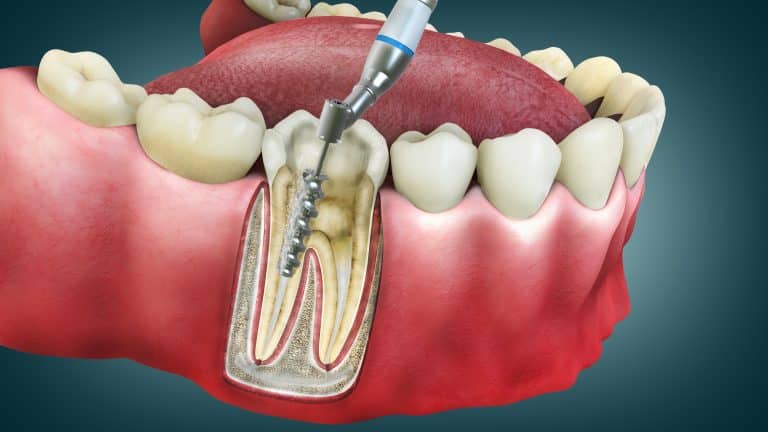
    In most cases, the tooth is numbed first, then isolated and opened so the damaged pulp can be removed. The inside of the tooth and the canals are cleaned, disinfected, filled, and sealed. Many teeth then need a filling or crown to protect them. According to the ADA, root canal treatment usually takes one or two visits, and a follow-up restoration is often needed to strengthen the tooth afterward.

    If you are the kind of person who feels better when you know the steps ahead of time, that is a good sign to ask questions during your dental exam. Most patients feel better once the process is explained plainly.

    Does a Root Canal Hurt?

    This question comes up every time, and for good reason. The phrase has had a bad reputation for years.

    Modern root canal treatment is usually not more painful than a filling. The ADA says there is little to no pain during treatment with local anesthesia, and the AAE says the procedure is generally no more painful than a routine filling, though some mild soreness afterward is normal.

    That is the part many people do not expect. The untreated infection often hurts more than the treatment does.

    Root Canal

    Are There Alternatives to a Root Canal?

    There is no honest one-size-fits-all number.

    Cost usually depends on which tooth is involved, how complex the case is, whether a crown is needed afterward, and what your insurance covers. The AAE notes that molars generally cost more than front teeth and that many dental insurance plans provide some coverage for endodontic treatment.

    The practical answer for patients is this: waiting tends to narrow your options. If a tooth can still be saved, treatment is often simpler than it will be a few months later.

    What Does a Root Canal Usually Cost?

    Sometimes. Not always.

    If the tooth is healthy enough structurally and the nerve is not irreversibly damaged, a filling, inlay, onlay, or crown may be enough. But once the pulp is infected or cannot recover, the real alternative is usually extraction, not a simpler filling.

    That choice matters. The AAE notes that extraction often leads to more appointments, replacement treatment such as an implant or bridge, and in many cases a higher total cost than root canal treatment and restoration of the natural tooth.

    What Happens If You Wait Too Long?

    Sometimes the pain fades for a while, and that can trick people into thinking the problem has settled down. It has not.

    If the nerve inside the tooth dies or the infection drains, the pressure may ease for a bit. The infection can still remain. The ADA warns that untreated infection around the root can damage the bone supporting the tooth and increase the risk of losing the tooth altogether.

    That is why these signs matter. They are not there to annoy you. They are there to tell you something is wrong.

    When To Call

    Call promptly if you have any of these:

    • pain when biting that does not let up
    • lingering hot or cold sensitivity
    • swelling near the tooth
    • a bump on the gums
    • a tooth that has darkened
    • pain that wakes you up or keeps coming back

    Those symptoms do not guarantee you need a root canal, but they do mean the tooth should be checked before the problem grows.

    Don’t Let a Saveable Tooth Get Worse

    A root canal is not something patients hope for, but it is often the treatment that saves a tooth that would otherwise keep getting worse. The sooner you know what is going on, the more options you usually have.

    If you are dealing with tooth pain, swelling, sensitivity, or a tooth that just does not feel right, call Veranda Family Dentistry at 772.336.2300 or request a visit through the contact page. A timely exam can tell you whether the tooth needs a filling, a crown, a root canal, or something else entirely.

    FAQ's About Root Canals

    Yes. Some teeth that need root canal treatment are only mildly painful, and some are not painful all the time. Swelling, a gum bump, color change, or lingering sensitivity can still point to infection or nerve damage.

    There is no safe universal timeline. If you have ongoing pain, swelling, drainage, or temperature sensitivity that lingers, it is better to get examined soon. Waiting can allow infection to spread and can reduce the chance of saving the tooth.

    Not always, but many teeth do need one. Back teeth especially take a lot of chewing force, and the ADA notes that a filling or crown is often placed after treatment to protect the tooth from further damage.

    Sometimes a tooth cannot be saved, and extraction is the right call. But when the tooth is restorable, keeping your natural tooth is often the simpler long-term move. The AAE explains that extraction can lead to more visits, more treatment, and higher overall cost once the tooth has to be replaced.

    Usually, yes. In many cases, patients can still have root canal treatment while taking blood thinners, but the dentist needs to know exactly which medication you take and why you take it. The American Dental Association explains that, for most patients, it is not necessary to change anticoagulant or antiplatelet therapy before dental treatment, though your dentist may coordinate with your physician if there are added medical concerns or a more complex procedure is planned.