
DENTAL IMPLANTS / PATIENT GUIDE
Loose Dental Implant Crown: What to Do and What Your Dentist Checks
What to do now, what your dentist checks, and what to bring to your visit.
October 22, 2026 · 5 minute read
Stock dental imagery, not a Veranda patient or team member.
THE SHORT ANSWER
If your dental implant crown moves, stop chewing on that side and call your dentist promptly. Do not twist it, tighten it, or glue it back in place. A loose crown does not always mean the implant in your jaw has failed. The problem may be in the crown or its connecting parts, but an exam is needed to tell.
The FDA advises contacting your dental provider right away when an implant feels loose or painful.
CALL PROMPTLY
How soon should you get help?
Call when you first notice movement, clicking, or a change in how your teeth meet. Do not wait for pain to appear or for your next cleaning. Let the office know if the crown is still attached, has come off, or feels different when you bite.
URGENT WARNING SIGNS
Tell the dental team about swelling, fever, pus, a bad taste, or pain that is getting worse. Those details help them decide how quickly you need to be seen. For trouble breathing or swallowing, or severe swelling of the mouth or face, seek emergency medical care. NHS dental infection guidance identifies breathing and swallowing problems as emergency warning signs.
UNDERSTAND THE PARTS
The crown and the implant are different parts
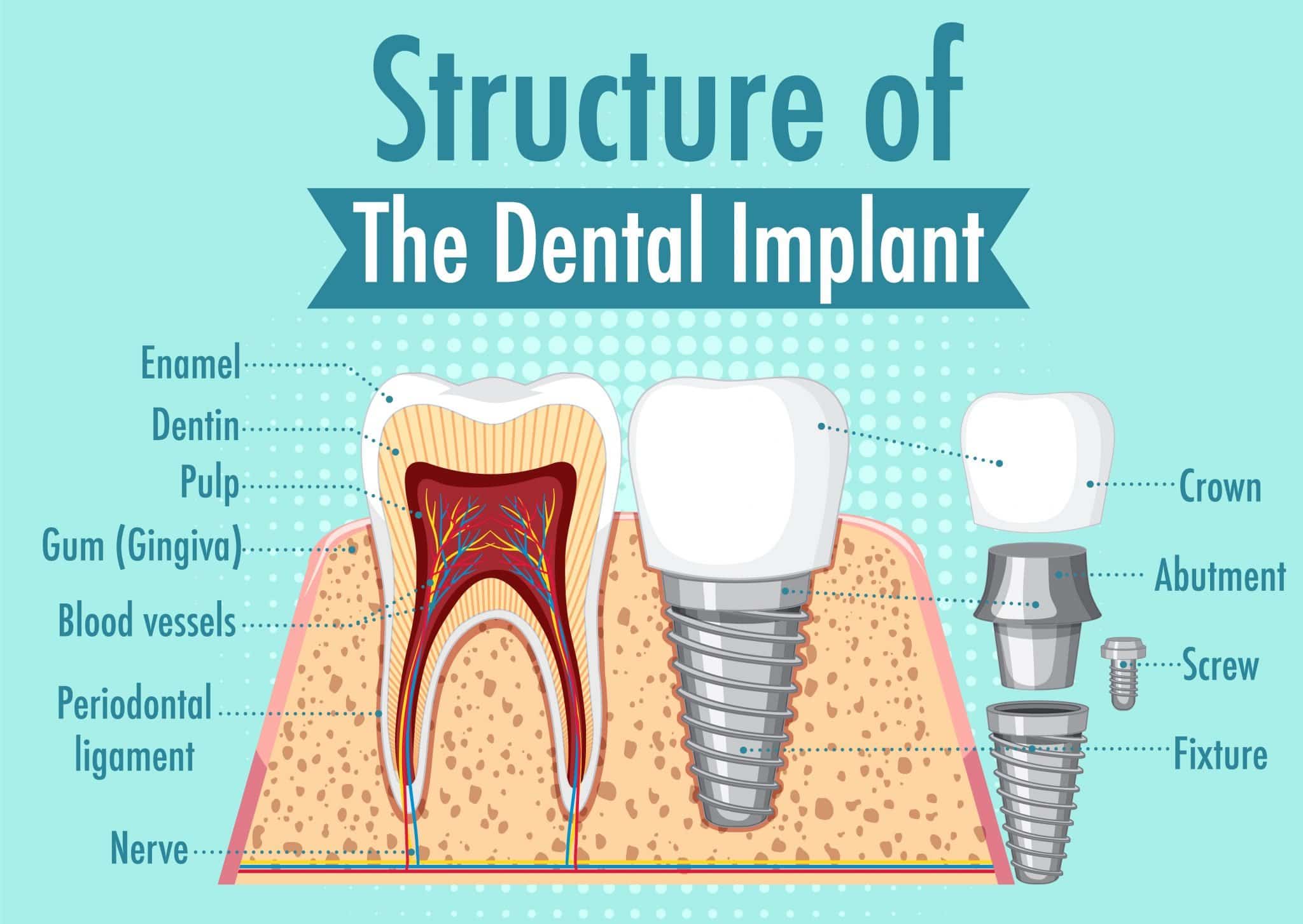
The visible tooth is the crown. Below it is a connector called an abutment. The implant body, also called the fixture, sits in the jawbone. A small screw often joins the connector to the implant.
Movement can come from a loose screw, a failed cement seal, a damaged part, or a problem with the implant’s support. These are not the same diagnosis. Looking in a mirror or moving the crown with your tongue cannot reliably tell you which part needs care.
The illustration shows how the parts fit together. Designs vary, so it is a guide to the names, not a picture of your exact implant system. Our implant restoration service page explains the role of the replacement tooth above the implant.
- Leave the crown alone. Do not keep testing its movement with your fingers or tongue.
- Avoid chewing on it. Choose soft foods and use the other side until you receive advice.
- Do not use glue or tools. Household adhesive, a home repair kit, or a small screwdriver is not a safe way to fix an implant crown.
- Keep a piece that has come out. Put it in a clean container and bring it with you. Do not force it back into place or pull off a part that is still attached.
- Ask about cleaning the area. Keep the rest of your mouth clean, but do not tug on the loose restoration.
These are short-term precautions, not a repair. An implant crown needs different handling from a crown fitted over a natural tooth. Do not follow instructions for reattaching a natural-tooth crown unless your dentist tells you they apply to your situation.
THE EXAMINATION
What will the dentist check?
The first job is to find where the movement starts. The dentist checks the crown, its fit, the connecting parts, your bite, and the gums. X-rays may help assess the implant and the bone around it. Records can help identify the implant system and the parts needed.
A repair may involve securing the restoration, replacing a worn or damaged part, or making a new crown. If the implant body or surrounding tissues are affected, the next step will be different. No single repair fits every loose implant crown.
The Canadian Dental Association’s clinical guide describes checking the cement seal, implant parts, X-rays, and bite before deciding on treatment. It also notes that a loose abutment screw needs urgent treatment to limit further damage. A dental examination helps turn the symptom you feel into a specific care plan.
TAKE THIS WITH YOU
A short checklist for your call and visit
You do not need to diagnose the problem before calling. A few clear details are more useful than guessing which part is loose:
- Where and when: Which tooth is affected, and when did the change begin?
- What changed: Is there movement, clicking, pain, swelling, or a different bite?
- What happened before: Did it follow an injury or a recent repair? Has the crown loosened before?
- What records you have: Bring the implant brand or model, previous treatment details, and the contact information for the office that placed it.
- What you need to ask: Can the crown be kept? Are replacement parts needed? What should you eat and how should you clean the area until it is fixed?
This checklist helps organize the conversation. It does not replace an examination, and you should not delay calling while you search for records.
REPAIR AND FOLLOW-UP
Will you need a new crown, and what affects the cost?
Not every loose crown needs to be replaced. The answer depends on what has loosened, whether any part is damaged, and whether the existing crown can be safely used again. The office may need to identify or order the correct components before completing the repair.
After repair, keep the recommended checks and cleaning routine. The American Academy of Periodontology explains that inflammation can affect the gums and bone around implants. Redness or bleeding deserves attention, whether or not the crown moves. Read about our gum care services if you also have concerns about gum health.
ASK FOR AN ESTIMATE
Ask for an estimate after the cause is known. Find out whether it covers the examination, imaging, replacement parts, a new crown if needed, and follow-up care. Ask separately about any temporary tooth and insurance coverage. A simple tightening and a new restoration are different treatments, so a general online price may not describe your needs.
COMMON QUESTIONS
Questions patients ask about a loose implant crown
Can I wait if it does not hurt?
Do not use the absence of pain as a reason to wait. A loose connecting screw can cause little or no discomfort. Call your dentist and explain the movement so the office can advise you on timing.
Does a loose crown mean the whole implant must come out?
No. A problem in the crown or connector is different from movement of the implant body in the jaw. An exam is needed to find the cause. Neither a simple repair nor implant removal can be assumed from the feeling alone.
What if it keeps becoming loose?
Tell the dentist about each previous episode and repair. Ask what may be causing the repeat problem, rather than assuming it only needs another adjustment. The bite, component condition, and fit may need to be reassessed.
VERANDA FAMILY DENTISTRY
Arrange a check for your loose implant crown
If your implant crown has started to move, call Veranda Family Dentistry in Port St. Lucie at 772.336.2300. Tell us what changed and whether you have pain or swelling so we can help you arrange the next step.
For a routine appointment request, you can use the appointment form. Call rather than waiting for a form reply if the problem needs prompt attention.