
Bleeding Around a Dental Implant: What It Can Mean and When to Call
Bleeding near a dental implant is not something to ignore. It can come from temporary irritation, but repeated bleeding may also be an early sign that the tissue around the implant is inflamed. A dentist can check the gums, the implant restoration, your bite, and bone levels when needed.
The short answer
Bleeding around an implant often means the nearby gum tissue is irritated or inflamed. One brief episode after vigorous brushing or flossing may settle, but bleeding that returns, happens without cleaning, or comes with redness, swelling, tenderness, pus, a bad taste, or looseness should be evaluated.
The symptom does not prove that the implant itself is failing. Healthy implants are surrounded by living gum and bone, and several different problems can affect those tissues. An exam helps separate a cleaning-related irritation from peri-implant mucositis, peri-implantitis, or a problem with the crown or other restoration.

Stock image of a dental professional discussing an implant model. The people shown are not identified as Veranda patients or clinicians.
“Bleeding around an implant is a sign to pay attention to, not a diagnosis you can make at home.”
What can cause bleeding around a dental implant?
The timing, frequency, and other symptoms provide useful clues. Common possibilities include:
Plaque and trapped debris
Bacterial plaque can collect along the gumline and in areas that are difficult to reach under an implant crown or bridge. Food can also become trapped if the contour is hard to clean. The tissue may look red, feel tender, or bleed during brushing, flossing, or a professional exam.
Temporary irritation from cleaning
A new flossing technique, a stiff brush, or forceful use of an interdental cleaner can injure the gum briefly. Bleeding from a small surface injury should improve as the area heals. If it continues, do not assume technique is the only cause.
Peri-implant mucositis
Peri-implant mucositis is inflammation limited to the soft tissue around an implant, without the supporting bone loss that defines peri-implantitis. Bleeding on gentle probing is one clinical sign, but diagnosis depends on the full exam. Early attention and professional guidance are important.
Peri-implantitis
Peri-implantitis involves inflamed tissue and progressive loss of supporting bone around an implant. It cannot be diagnosed by looking in the mirror. A dentist may compare probing findings and X-rays with earlier records to determine whether bone levels have changed.
When should you call a dentist?
Bleeding can also occur when a restoration is difficult to clean, loose, damaged, or affecting the bite. If the crown moves, read our guide to a loose dental implant crown. The implant fixture, connector, and visible crown are different parts, so looseness needs professional evaluation.
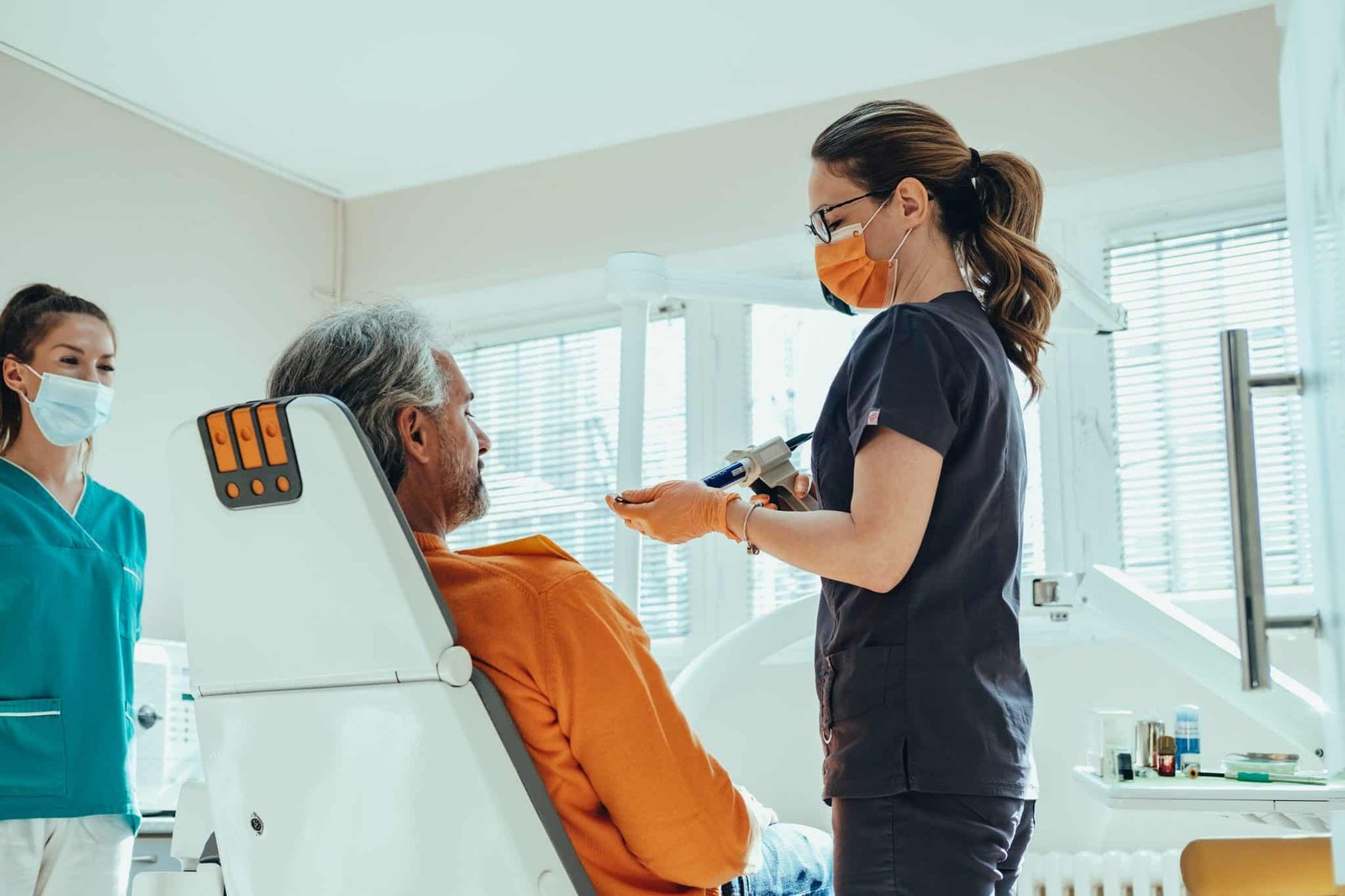
Stock image of a dental follow-up visit. The people shown are not identified as Veranda patients or clinicians.
Arrange an evaluation if bleeding repeats, lasts more than a few days, or appears without brushing or flossing. Call sooner if you notice increasing redness, swelling, tenderness, gum recession, pus, a persistent bad taste or odor, or a change in how the area feels when you bite.
A loose crown, bridge, or implant component also deserves prompt attention. Avoid chewing hard or sticky foods on that side until it is checked. Facial swelling, fever, rapidly worsening pain, or trouble swallowing or breathing can require urgent care. Our guide to what counts as a dental emergency explains when not to wait.
What will the dentist check?
A focused dental examination may include a review of when the bleeding started, your home-care routine, smoking or diabetes history, and any recent change in the restoration. The dentist may:
- inspect the color, contour, and tenderness of the gum tissue;
- check for plaque, calculus, trapped debris, or excess cement;
- measure tissue depths and look for bleeding or drainage;
- test whether the crown, connector, or implant feels mobile;
- evaluate the bite and whether the restoration can be cleaned effectively; and
- compare current X-rays with earlier images when bone change is a concern.
These findings guide the next step. Bleeding alone cannot show whether bone has been affected.
What should you do before your appointment?
Keep the area clean, but do not scrub aggressively or force an unfamiliar tool under the restoration. Use a soft-bristled toothbrush and the cleaning method previously recommended for your implant. If floss catches, shreds, or cannot pass comfortably, stop and mention it during the visit.
Do not pry at the crown, apply household glue, or place aspirin on the gum. Avoid tobacco and foods that repeatedly irritate the site. Make a note of when the bleeding occurs and whether you have swelling, drainage, a bad taste, pain, or movement. That information can make the evaluation more useful.
Can better cleaning stop the bleeding?
Better plaque control may help when inflammation is limited to the soft tissue, but technique matters and home care is not a substitute for diagnosis. A professional may need to remove deposits or identify a contour, cement, bite, or restoration problem that a toothbrush cannot correct.
People with a history of gum disease, smoking, uncontrolled diabetes, or inconsistent maintenance can have higher risk for peri-implant disease. Follow the recall schedule recommended for your situation and ask which brush, floss, or interdental aid fits your restoration. Veranda’s periodontal care information explains why healthy supporting tissue matters.
What affects treatment and cost?
There is no single treatment or price for bleeding around an implant. Cost depends on the cause, the tests needed, whether the problem is limited to the gum tissue, and whether a crown or other component needs adjustment or replacement. Existing X-rays, the type of restoration, insurance benefits, and the number of affected sites can also change the total.
An examination comes before a treatment estimate. If the visible restoration is part of the problem, learn more about dental implant restoration.
Questions patients ask about bleeding near an implant
Is a little bleeding around an implant normal?
A single episode after forceful cleaning can happen, but repeated bleeding is not a healthy baseline. If it returns or comes with redness, swelling, tenderness, drainage, odor, or looseness, schedule an evaluation.
Does bleeding mean the implant is failing?
No. Bleeding can come from soft-tissue inflammation or irritation and does not by itself prove implant failure. The dentist must assess the tissue, restoration, stability, and bone levels.
Can I use mouthwash until it improves?
Mouthwash may freshen the mouth, but it cannot diagnose the cause or correct a loose or poorly fitting restoration. Do not rely on it to delay an exam. Use prescription rinses only as directed by a clinician.
Will the implant need to be removed?
Not necessarily. The recommendation depends on the diagnosis and extent of any tissue, bone, or restoration problem. Some concerns can be managed without removing the implant, while advanced problems may require referral or additional treatment.
Concerned about bleeding around an implant?
Call Veranda Family Dentistry at 772.336.2300 to schedule an evaluation. We can examine the tissue and restoration, explain what we find, and discuss appropriate next steps.
Sources and further reading
- American Academy of Periodontology: Peri-Implant Diseases
- National Institute of Dental and Craniofacial Research: Gum Disease
- American Academy of Periodontology and Academy of Osseointegration 2024 consensus on prevention and management of peri-implant diseases
- Consensus report on peri-implant disease diagnosis and maintenance