

Can You Get Dental Work While Taking Blood Thinners?

Learn how dental work is planned while taking blood thinners, including cleanings, root canals, extractions, implants, and when doctors may adjust medication.

Table of Contents
    Add a header to begin generating the table of contents

    Taking a blood thinner can make an ordinary dental appointment feel more complicated than it needs to be. In most cases, you can still receive dental care, but the plan may change depending on the procedure, the medication, and your medical history. Routine treatment may require no adjustment. A tooth extraction, implant procedure, or gum surgery may require your dentist and prescribing clinician to agree on a temporary medication plan.

    The most important rule is simple: never stop, delay, reduce, or restart a prescribed blood thinner on your own.

    The Short Answer

    People taking blood thinners can usually have dental work. Exams, X-rays, fillings, crowns, and many root canals create little bleeding. Deep cleanings, tooth extractions, implant placement, bone grafting, and gum surgery need more planning because they disturb tissue and may leave a wound.

    There is no universal schedule for stopping or restarting these medications. One patient may continue treatment normally. Another may be told to change the timing of a dose or pause the medication for one or more days. The American Dental Association’s guidance on anticoagulant and antiplatelet medications states that most patients do not need a change in their medications before dental treatment, but those with a higher bleeding risk or undergoing more extensive surgery may need an individualized plan developed with their physician.

    This article provides general information. Your own instructions should come from the dentist performing the procedure and the clinician who manages your medication.

    Why Instructions Can Differ

    Port Saint Lucie Dental Work On Blood Thinners

    “Blood thinner” is a broad term that includes anticoagulant and antiplatelet medications. These drugs work in different ways, remain active for different lengths of time, and may be prescribed to prevent different medical problems.

    The dental procedure also matters. A filling does not create the same bleeding risk as several surgical extractions. Your care team may consider the medication and dose, why it was prescribed, the expected bleeding, kidney or liver function, other medications, and any history of bleeding or clotting problems.

    Different dentists and medical clinicians may choose different, reasonable plans within accepted guidance. One team may continue the medication for a simple extraction. Another may recommend a timed dose adjustment or a temporary hold before a more involved procedure. That variation reflects clinical judgment, the planned treatment, and the patient’s health rather than one schedule being appropriate for everyone.

    Exams, X-Rays, and Routine Cleanings

    A dental exam, X-rays, scans, impressions, and most diagnostic work do not normally create a meaningful bleeding concern. A standard cleaning above the gumline is also usually manageable without changing medication.

    These appointments are still a good time to review your medical history. Bring an accurate medication list and mention any recent dose changes, hospitalizations, heart procedures, strokes, blood clots, or prior difficulty controlling bleeding.

    Deep Cleaning and Gum Treatment

    Scaling and root planing reaches below the gumline and may cause more bleeding than a routine cleaning. The dentist or hygienist may treat a smaller area, schedule the appointment earlier in the day, and confirm that bleeding is controlled before you leave.

    Periodontal surgery requires more planning because it may involve lifting or reshaping gum tissue. Patients who need care below the gumline can learn more about periodontal gum treatment and how it differs from routine preventive care. Dental guidance separates routine cleanings, deep cleaning, and periodontal surgery because they do not carry the same likelihood of postoperative bleeding.

    Fillings, Crowns, Bridges, Veneers, and Dentures

    Most fillings and restorative appointments involve little bleeding, especially when the work stays above the gumline. Crowns, bridges, veneers, dentures, and partial dentures can often be completed without changing blood-thinning medication.

    The plan can change if decay or damage extends below the gumline or the dentist needs to reshape surrounding tissue. Crown lengthening and gum recontouring are surgical procedures, so they require a different bleeding-risk review than a routine filling or crown preparation.

    Root Canal

    Root Canal Treatment

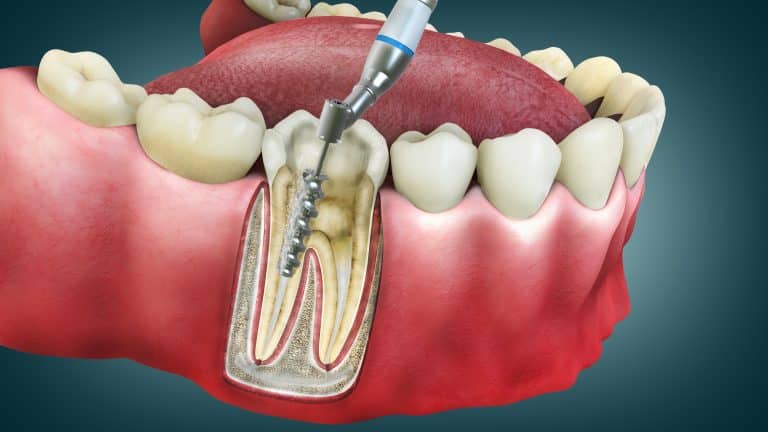
    A conventional root canal usually causes little bleeding because the dentist works inside the tooth rather than creating a surgical wound in the gums or bone. Many patients can have root canal treatment without changing their medication.

    The plan may differ if an infection requires surgical drainage or treatment near the root tip. From a bleeding standpoint, saving a tooth with root canal treatment may also be simpler than creating an open extraction socket.

    Tooth Extraction While Taking Blood Thinners

    A tooth can often be removed safely while a patient is taking blood-thinning medication, but extractions require individual planning.

    A simple extraction may be completed without changing the medication, using pressure, absorbable packing, sutures, or other local methods to control bleeding. A difficult surgical extraction, several teeth removed together, or a larger wound may call for a different approach.

    Depending on the medication, procedure, and medical risk, the plan may involve:

    • Continuing the medication normally
    • Changing the timing of a dose
    • Pausing the medication for one or more days
    • Dividing treatment into smaller stages
    • Restarting only after bleeding is adequately controlled

    The dentist may recommend a specific hold and restart schedule, but any interruption should be approved by the clinician who prescribes or manages the medication. The SDCEP guidance for dental patients taking anticoagulant or antiplatelet drugs uses medication-specific and procedure-specific recommendations rather than one rule for every patient.

    Before a tooth extraction, make sure both offices understand the planned procedure. Your instructions should clearly state when to take the final dose before treatment, whether any doses should be skipped, and when to resume the medication.

    Dental Implants, Bone Grafts, and Oral Surgery

    Implant placement, bone grafting, surgical extractions, biopsies, and gum surgery are more likely to cause postoperative bleeding than routine restorative care. These procedures are not automatically ruled out for people taking blood thinners, but they require more preparation.

    The dentist may schedule treatment early in the day, limit how much is completed at one visit, use sutures or packing, and observe the treatment site before you leave. Complex cases may require direct communication with a primary care physician, cardiologist, hematologist, or another prescribing clinician.

    Dental Implant Procedure - Veranda Family Dentistry

    Will Dental Work Hurt More?

    Blood thinners affect clotting. They do not necessarily make a filling, crown, root canal, or extraction more painful.

    Discomfort depends more on the procedure and the condition being treated. Ask which pain reliever is appropriate afterward because some over-the-counter products may increase bleeding or interact with prescribed medication. Do not assume the pain medicine you normally take is suitable after an invasive dental procedure.

    What Your Dentist Needs to Know

    Bring a current list showing the name, dose, schedule, and reason for every prescription. Include over-the-counter medicines, vitamins, and herbal supplements.

    Also tell the dental office about recent medication changes, a history of stroke or blood clots, heart procedures, kidney or liver disease, easy bruising, and previous bleeding after surgery or dental care.

    Some blood thinners require laboratory monitoring, while others do not. The dental team will tell you whether a recent test result is needed before treatment.

    What Happens After a Procedure?

    For treatment that causes bleeding, the dental team should make sure the area is stable before you leave. You may receive gauze, sutures, packing material, and written instructions for protecting the clot.

    Contact the office if bleeding remains heavy, repeatedly restarts, or does not slow after following the pressure instructions you were given. Seek urgent medical care for uncontrolled bleeding, weakness, fainting, trouble breathing, or another severe symptom.

    What Patients Usually Ask Before Scheduling

    Yes. Some extractions can be completed without interrupting medication, while others may lead the dentist to recommend a temporary hold. The length of that hold can vary from a timing adjustment to several days. Follow only the plan approved by both the dentist and the clinician who manages the medication.

    Sometimes, but not always. The correct timing depends on the procedure, the medication, the reason it was prescribed, and whether bleeding is controlled. Use the written instructions provided by your care team.

    Not for every appointment. The dentist may contact the prescribing clinician when surgery is planned, the bleeding risk is higher, several medications are involved, or the medical history needs clarification.

    Do not choose between them yourself. Ask the offices to communicate and provide one coordinated plan covering the last dose, the procedure, bleeding control, and when the medication should restart.

    Usually, from a bleeding standpoint. A conventional root canal works inside the tooth and does not leave an open extraction socket. The better treatment still depends on whether the tooth can be saved.

    Plan the Dental Care With Both Sides of Your Health in Mind

    Taking a blood thinner does not mean you must avoid needed dental work. It means the plan should protect you from excessive bleeding without creating an unnecessary risk from interrupting clot prevention.

    If you need an exam, root canal, gum treatment, crown, or tooth extraction in Port St. Lucie, call Veranda Family Dentistry at 772.336.2300, fill out he form below, or use the contact page to request an appointment. Have your medication list ready, so the team can review the procedure and determine whether coordination with your prescribing clinician is appropriate.