
Dental Implants vs Bridges: Which Is Better for Missing Teeth?

Compare dental implants and bridges, including cost, timing, comfort, and when each option may fit best for missing teeth in Port St. Lucie patients.

Table of Contents
    Add a header to begin generating the table of contents

    A missing tooth can make every meal feel different. Dental implants and bridges can both replace missing teeth, but they work in very different ways. The better option depends on your bone support, neighboring teeth, budget, timeline, and whether you want a replacement that stands on its own or one supported by nearby teeth.

    If you are comparing the two, you are already asking the right question. The goal is not to choose the treatment that sounds best online. The goal is to choose the one that fits your mouth, your health, and the way you want to live.

    The Short Answer

    A dental implant is often the closest replacement to a natural tooth because it replaces the tooth root and supports a crown above the gumline. A dental bridge can be a strong choice when you want a fixed replacement but are not ready for implant surgery, or when the teeth next to the gap already need crowns.

    The American Dental Association explains that dental implants are designed to blend in with surrounding teeth, while dental bridges replace missing teeth by spanning the gap with support from surrounding teeth or implants. Both can work well. The right choice comes down to the condition of your teeth, gums, and jawbone.

    How a Dental Implant Works

    Dental Implants - Veranda Family Dentistry

    A dental implant replaces the missing tooth root. After the implant is placed in the jawbone and has time to heal, a custom restoration is attached above it. That final tooth is designed to look and function like part of your natural smile.

    For many patients, the biggest advantage is independence. An implant does not rely on neighboring teeth for support. That can make it a strong option when the teeth on each side of the space are healthy and do not need crowns.
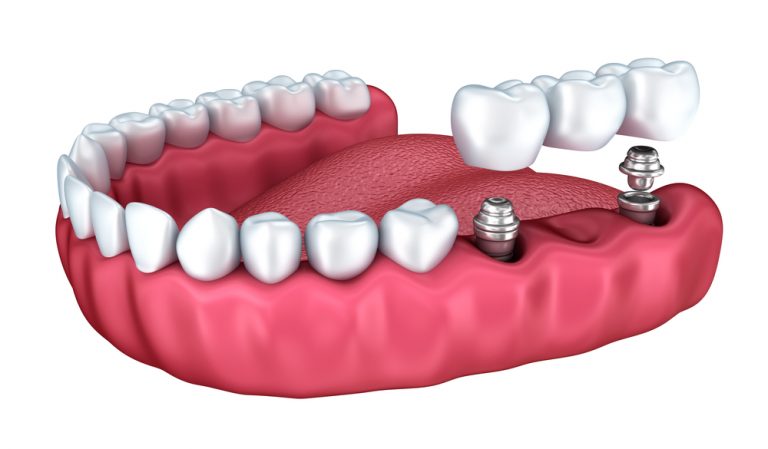
    Implants do require planning. Your dentist has to evaluate bone support, gum health, bite forces, and overall health before recommending treatment. At Veranda Family Dentistry, patients interested in this option can learn more about dental implant restoration in Port St. Lucie and how the final restoration is designed after implant placement.

    How a Dental Bridge Works

    A dental bridge fills the empty space with an artificial tooth. In a traditional bridge, the replacement tooth is connected to crowns placed over the teeth on either side of the gap. Once cemented in place, the bridge does not come in and out like a removable appliance.

    A bridge can be a smart option when the neighboring teeth already need crowns or have large restorations. It may also appeal to patients who want a fixed solution but prefer to avoid implant surgery.

    implant supported dental bridge

    The tradeoff is that a bridge depends on the support teeth around the missing tooth. Those teeth have to be reshaped to hold the bridge. That is not automatically a problem, but it is one of the main reasons the exam matters. You can see how Veranda approaches this option on the dental bridges page.

    Which Option Looks More Natural?

    Both can look natural when they are well planned and well made.

    An implant often feels more like a natural tooth because it is anchored independently in the jaw. There is no connected row of crowns, and the replacement tooth rises from the gumline in a way that can closely mimic a real tooth.

    A bridge can also look excellent, especially when the shade, shape, and bite are carefully designed. For front teeth, the details matter. Gum shape, smile line, and neighboring tooth color all affect the final result.

    Which One Lasts Longer?

    Implants are often chosen because they can be a long-term solution when cared for properly. Bridges can also last many years, but they depend on the health of the supporting teeth. If one of those teeth develops decay or fracture, the entire bridge may need attention.

    That does not make one option automatically better. It means maintenance matters. Brushing, flossing, cleanings, exams, and bite protection all play a role in how long either treatment lasts.

    Which Costs More?

    Dental implants usually cost more up front because they involve surgical placement, healing time, and a final restoration. Bridges may cost less initially, especially when the supporting teeth already need crowns.

    But cost should not be judged only by the first bill. A bridge may involve future replacement or repair if one of the support teeth develops a problem. An implant may require more planning in the beginning but may preserve neighboring teeth that would otherwise need to be reshaped.

    The honest answer is that cost depends on the tooth, materials, imaging, bone support, and treatment plan. A dental exam is the only way to compare options accurately for your mouth.

    dental implant follow-up

    Does Either Treatment Hurt?

    Most patients are more worried about this than they admit.

    A bridge usually involves preparing the nearby teeth, taking impressions or scans, and placing a temporary or final restoration. The area is numbed during treatment, and soreness is usually manageable.

    An implant involves a surgical step, so there may be temporary soreness during healing. That said, many patients are surprised that implant recovery is more manageable than they expected. Your dentist will review what to expect before you begin, including how to care for the area and what symptoms should be reported.

    When Is an Implant Usually Better?

    An implant may be the stronger choice when:

    • the neighboring teeth are healthy
    • you want a standalone replacement
    • there is enough bone support
    • you are comfortable with a longer timeline
    • you want to avoid reshaping nearby teeth

    Implants are often favored when the long-term goal is to preserve as much healthy tooth structure as possible.

    When Is a Bridge Usually Better?

    A bridge may make more sense when:

    • the teeth next to the gap already need crowns
    • you want a fixed option without implant surgery
    • bone support is limited
    • you need a faster treatment timeline
    • medical factors make implant treatment less ideal

    This is why “implants vs bridges” is not a contest with one universal winner. It is a decision based on the full picture.

    What About Partials or Dentures?

    If you are missing several teeth, an implant or bridge may not be the only conversation. A partial denture can replace multiple missing teeth with a removable appliance, while full dentures replace a full arch. The ADA explains that partial dentures can replace one or more missing teeth when natural teeth remain.

    For some patients, a partial is the most practical starting point. For others, implants or bridges provide better comfort and confidence. If several teeth are missing, the treatment plan should look at the whole bite, not just one empty space.

    dentures in psl fl

    How Dentists Help You Choose

    The right recommendation starts with facts, not guesswork.

    Your dentist will look at:

    • the number of missing teeth
    • the health of nearby teeth
    • gum health
    • bone support
    • bite pressure
    • cosmetic goals
    • budget and timeline

    For implant planning, imaging may also be needed to evaluate bone structure. When appropriate, Veranda uses technology such as a CBCT scan to help assess the mouth in greater detail before treatment decisions are made.

    What Patients Usually Ask Before Choosing

    Sometimes, but not always. An implant may be better when neighboring teeth are healthy and there is enough bone support. A bridge may be better when nearby teeth already need crowns or when implant surgery is not the right fit.

    A bridge is usually faster. An implant often takes longer because the implant needs time to heal before the final restoration is placed.

    Sometimes, yes. It depends on bone support, gum health, and the condition of the surrounding teeth. Your dentist can evaluate whether that is realistic before you make a decision.

    Coverage varies by plan. Some plans cover part of a bridge, implant crown, or related treatment, while others have limits. The best approach is to review your benefits before starting care.

    A Clear Next Step

    If you are deciding between a dental implant and a bridge, do not pressure yourself to choose based on general advice. Both treatments can work well, but the right answer depends on what is happening in your mouth.

    Veranda Family Dentistry can help you compare your options clearly and choose a replacement that fits your health, comfort, and long-term goals. Schedule a visit through the form below to start with an exam and a practical treatment conversation.