
How Long Do Tooth-Colored Fillings Last, and What Makes Them Wear Out?
Composite fillings can serve a tooth for years, but their useful life depends on the tooth, the size of the restoration, bite forces, decay risk, and daily care.
The short answer
There is no single expiration date for a tooth-colored filling. Many modern composite restorations perform well for five to ten years or longer, while some need attention sooner and others remain serviceable much longer. A dentist decides whether a filling is still sound by checking the margins, the surrounding tooth, your bite, symptoms, and X-rays when appropriate, not by age alone.
A filling that looks old does not automatically need replacement. Likewise, a newer filling should be checked if it becomes painful, rough, chipped, loose, or difficult to clean. If a recently placed restoration is sensitive, our guide to sensitivity after a filling explains what may be expected and when to call.

Stock photo. The person shown is not identified as a Veranda patient.
“A filling does not need replacement because a calendar says so. It needs attention when the tooth, the margin, the material, or the bite shows a problem.”
What does it mean for a filling to “last”?
A filling is doing its job when it seals and supports the prepared part of the tooth, remains comfortable in the bite, and allows the area to be cleaned. It may develop small surface changes without failing. Staining at an edge, for example, is not the same thing as decay underneath it.
The more useful question is whether the restoration and the remaining tooth are healthy together. The National Institute of Dental and Craniofacial Research notes that fillings and crowns do not last a lifetime. At the same time, research on modern resin composites shows strong medium-term survival. An ADA review cited roughly 82 percent survival at ten years for posterior composite restorations in the evidence it evaluated. Those averages describe groups, not a promise for one person or one tooth.
Why do some tooth-colored fillings last longer than others?
The material matters, but the clinical situation and your day-to-day risks often matter just as much. Our tooth-colored fillings service page explains how composite restorations are used to repair teeth affected by decay or damage. Four factors have an especially large influence:
Size and location
A small filling surrounded by strong tooth structure usually faces a different workload than a large restoration that replaces several surfaces of a back tooth.
Bite forces
Clenching, grinding, hard foods, and the forces on molars can contribute to wear, chipping, or fractures in the filling or the tooth around it.
Bonding conditions
Composite is technique-sensitive. The tooth must be properly prepared and isolated while the restoration is bonded and cured.
Decay risk and cleaning
Plaque, frequent sugar exposure, dry mouth, and difficulty cleaning the margins can increase the chance of new decay beside or beneath a filling.
Regular dental exams give the dentist a chance to compare the restoration over time, check the bite, and look for changes that are not easy to see at home.
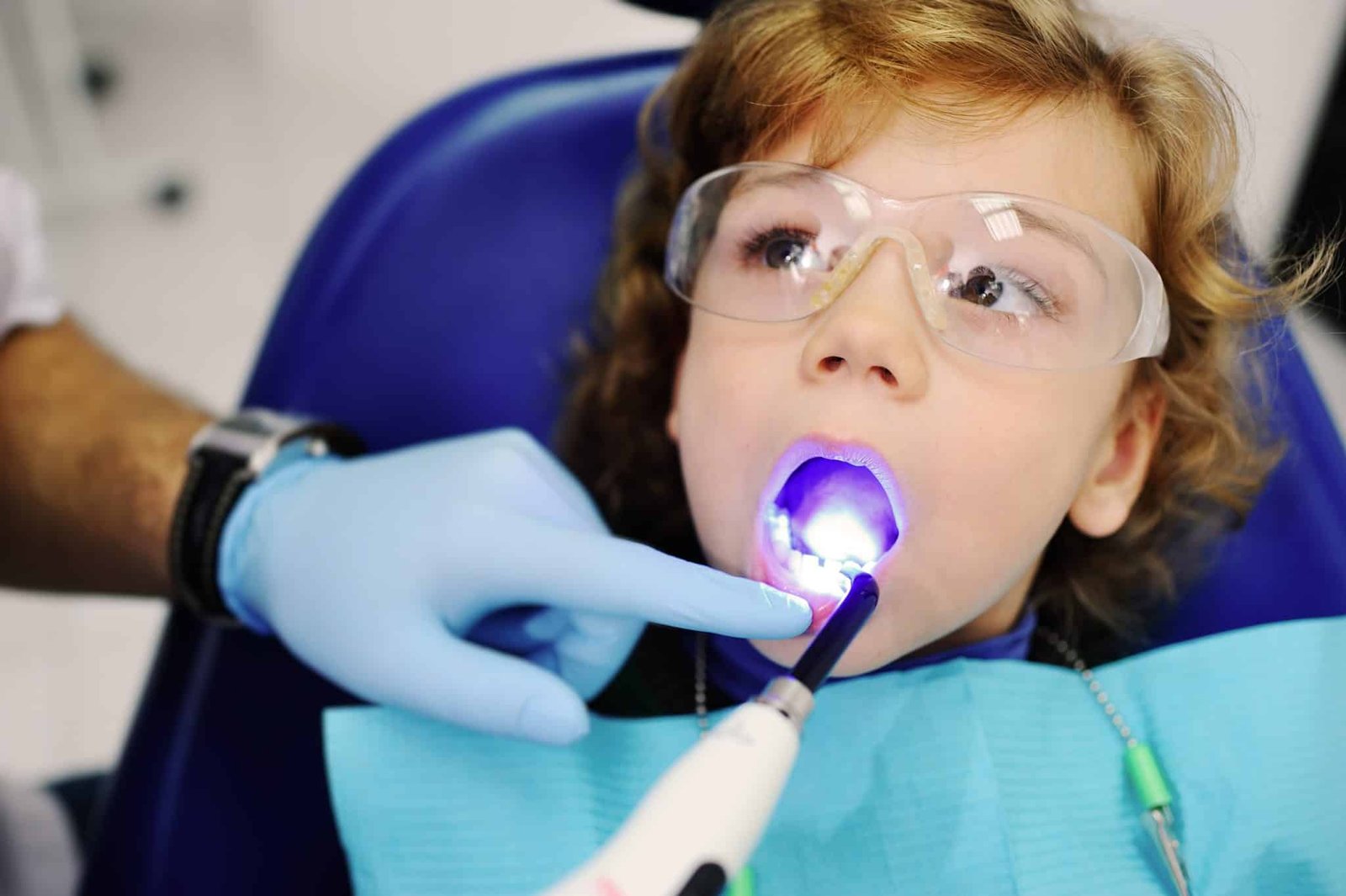
Stock photo. The child and clinician shown are not identified as Veranda patients or team members.
What makes a composite filling wear out?
Chipping or fracture: Repeated biting forces can crack the restoration or the remaining tooth. A fractured cusp may occur around a large filling.
New decay at the margin: A filling does not make the tooth immune to cavities. Plaque can collect where the restoration meets enamel, especially if an edge becomes chipped or hard to clean.
Marginal breakdown: Small gaps, roughness, or loss of the seal may develop over time. Not every stained line is a cavity, so examination matters before replacement is recommended.
Wear or bite changes: A restoration can lose contour or contact with the neighboring tooth. That may contribute to food trapping, floss shredding, or a bite that feels different.
What signs mean a filling should be checked?
Call for an evaluation if you notice a new or worsening change, including:
- sharp pain when biting or when pressure is released;
- cold or heat sensitivity that lingers instead of fading quickly;
- a rough, sharp, chipped, or visibly cracked edge;
- food repeatedly packing beside the filling;
- floss that catches or shreds at the same spot;
- a filling that feels loose or a bite that suddenly feels uneven; or
- swelling, a bad taste, or severe pain.
These symptoms can also come from problems other than the filling. A crack, decay, gum inflammation, or irritation inside the tooth may feel similar. The American Association of Endodontists advises prompt evaluation for sharp biting pain and symptoms that may relate to a crack or loose filling.
Can a filling be repaired instead of replaced?
Sometimes. A small chip or localized defect may be repairable when the remaining restoration and tooth are sound. In other situations, removing and replacing the filling is the more predictable way to examine the area, remove decay, and restore the seal. The choice depends on the defect, access, remaining tooth structure, bite forces, and whether decay is present.
A very large damaged restoration may no longer leave enough strong tooth structure for another direct filling. An onlay or crown may be discussed when broader coverage is needed. Our crown versus filling guide explains the structural questions behind that decision. An exam is necessary before any option can be recommended for a particular tooth.
How can you help a tooth-colored filling last?
- Brush twice a day with fluoride toothpaste. Cleaning the tooth around the filling helps protect the margin from new decay.
- Clean between the teeth every day. Floss or another recommended interdental tool helps reach the side of the restoration that a toothbrush cannot.
- Limit frequent sugar and acid exposures. How often teeth are exposed can matter as much as the total amount.
- Keep routine cleaning and exam visits. Professional teeth cleanings and periodic checks help identify plaque buildup, wear, bite issues, and early changes.
- Protect the tooth if you grind. If the dentist finds signs of clenching or grinding, ask whether a protective appliance is appropriate. Do not assume every person needs one.
- Avoid using teeth as tools. Opening packages or biting very hard nonfood objects can fracture natural teeth and restorations.
When should you call Veranda Family Dentistry?
Arrange a visit if a filling has new pain, lingering sensitivity, a rough or broken edge, repeated food trapping, or a change in the bite. Call sooner for swelling, severe pain, fever, or facial swelling. Those symptoms may need urgent assessment.
If the filling feels normal, continue routine preventive care rather than replacing it because of age alone. During an exam, the dentist can check the restoration, the remaining tooth, and the surrounding gum and explain whether monitoring, repair, replacement, or a different restoration is appropriate.
Have a filling that feels different?
Call Veranda Family Dentistry at 772.336.2300 to schedule an evaluation in Port St. Lucie.
Sources and further reading
- National Institute of Dental and Craniofacial Research: Dental Fillings
- American Dental Association: Materials for Direct Restorations
- NIDCR: Factors That Affect the Longevity of Tooth-Colored Fillings
- American Association of Endodontists: Cracked Teeth
- U.S. Food and Drug Administration: Dental Filling Treatment Options