
Why Does My Tooth Still Hurt After a Root Canal?
Mild tenderness for a few days after root canal treatment can be part of healing, especially when the tooth was painful or infected before treatment. The important pattern is that discomfort should become less frequent and less intense. Severe pain, worsening pressure, swelling, an uneven bite, a lost temporary filling or crown, or symptoms that return after improving should be checked.
Pain alone cannot tell you exactly what is happening. A dentist may need to examine the tooth, compare your bite, and review an X-ray. The most useful way to describe the problem is by its direction, duration, and trigger: Is it improving or worsening? How long has it lasted? Does it happen only when you bite, or does it throb without contact?
What soreness can be normal after a root canal?
Root canal treatment removes inflamed or infected tissue from inside the tooth, then cleans, fills, and seals the canals. The nerve tissue inside the tooth is removed, but living tissues still surround the root. Those tissues can remain tender while they recover.
The American Association of Endodontists says the treated area may feel tender for a few days, and your jaw may also be sore from staying open during the procedure. The American Dental Association similarly notes that the tooth and surrounding area may feel sensitive for several days.
A reassuring recovery usually has a clear trend: soreness is manageable, mostly linked to pressure or chewing, and gradually improves. Some people have little discomfort. Others notice the tooth feels different from nearby teeth for a while. Neither pattern should be judged by the calendar alone. The direction of change matters.
Why can biting hurt even after the nerve is removed?
Biting pressure is carried through the tooth into the ligament and bone around its root. Those tissues may still be irritated after treatment. If the temporary or final restoration sits slightly higher than the surrounding teeth, that tooth may take extra force each time you close your mouth.
A high bite can feel like the treated tooth touches first. It may cause a sharp or bruised sensation when chewing even if the tooth is quiet at rest. Do not try to wear it down by repeatedly chewing on it. A dentist can check the contact points and decide whether an adjustment is appropriate.
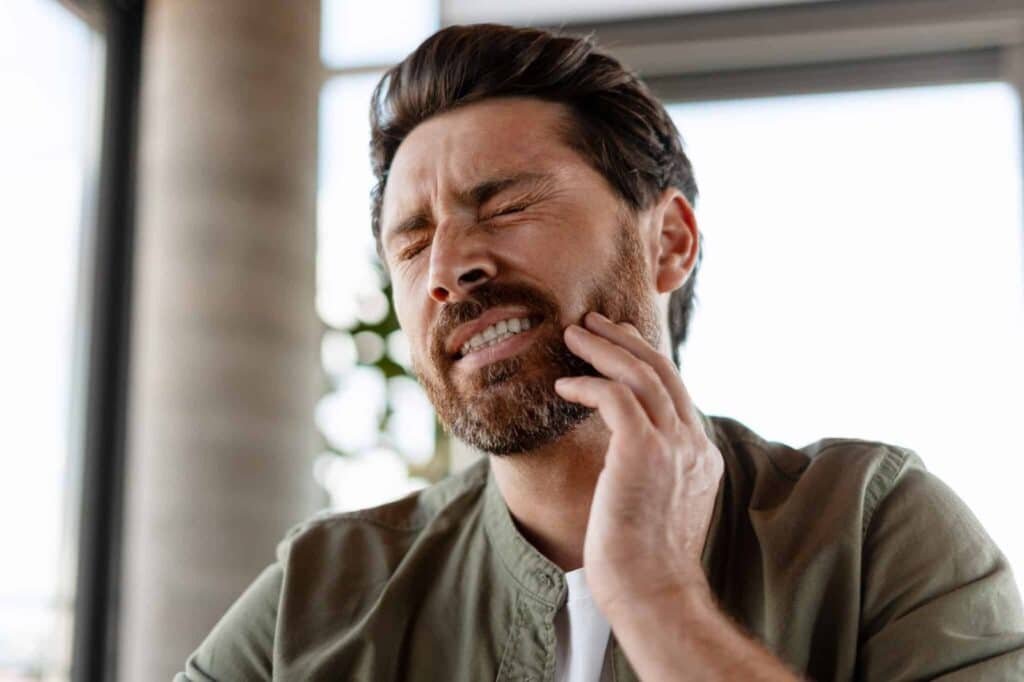
This licensed stock photo is for illustration only. The person shown is not a Veranda patient or clinician.
When should pain after a root canal be checked?
Call the treating dentist or endodontist when pain is severe, is getting worse instead of better, or continues as strong pressure for more than a few days. Visible swelling inside or outside the mouth also needs prompt attention.
Other reasons to call include an uneven bite, a temporary filling or crown that comes out, or the return of symptoms you had before treatment. A pimple-like bump on the gum, drainage, fever, increasing facial swelling, or trouble swallowing or breathing should not be ignored. Trouble breathing or rapidly spreading swelling can require urgent medical care.
If you are unsure, describe the timeline rather than trying to diagnose the cause. Tell the office when treatment occurred, whether pain ever improved, what triggers it, whether you can chew, and whether swelling or a loose restoration is present.
What might a dentist evaluate?
A follow-up is not an automatic sign that the root canal failed. The dentist may first check whether the bite is high, whether the temporary or permanent restoration is intact, and whether the gums or nearby teeth are contributing to the discomfort. An examination and X-ray can help compare the tooth with its earlier condition.
If pain develops months or years later, the questions change. The American Association of Endodontists notes that a previously treated tooth can sometimes develop a new problem because of new decay, a loose or cracked restoration, a fracture, delayed final restoration, or anatomy that was difficult to treat. Depending on the finding, options may include monitoring, adjusting the bite, repairing the restoration, endodontic retreatment, another procedure, or discussing replacement when the tooth cannot be saved.
That is why a symptom checklist should guide the timing of an appointment, not predict the treatment.
How can you protect the tooth while it heals?
Follow the instructions given by your dentist or endodontist because they reflect your procedure, medical history, and restoration. Do not place aspirin on the tooth or gum. Ask before taking pain medicine if you have health conditions, allergies, take blood thinners, or use other medicines that could interact.
Avoid chewing hard or sticky foods on the treated tooth until the permanent restoration is complete and your dentist says it is ready for normal use. An unrestored tooth is more vulnerable to fracture. Brush and floss as directed, using a gentle approach around a tender area. If a temporary filling or crown loosens or comes out, call rather than trying to glue it back yourself.
Keep the follow-up appointment for the final filling or crown. Root canal treatment addresses the inside of the tooth, while the final restoration helps protect the remaining tooth structure.
How does this differ from pain before a root canal?
Before treatment, lingering sensitivity to heat or cold, spontaneous throbbing, swelling, or severe biting pain may point to inflamed or infected pulp and the tissues around the tooth. After treatment, mild short-term tenderness can reflect healing around the root. The same symptom can therefore mean different things depending on timing and trend.
For background on the decision itself, read how root canal treatment compares with extraction. If you are still trying to understand symptoms before treatment, see signs that may lead to a root canal evaluation. Sensitivity connected to a newer restoration may also overlap with our guide to a tooth that feels sensitive after a crown.
What should you do if the pain is not improving?
Do not wait for a severe problem just because the tooth was already treated. Contact the office that performed the procedure or arrange a dental examination if the pattern is concerning. Veranda Family Dentistry can evaluate dental pain in context and discuss the appropriate next step. Learn more about root canal care in Port St. Lucie.
Call 772.336.2300 if your treated tooth is becoming more painful, swollen, or difficult to bite on. If swelling is spreading rapidly or affects breathing or swallowing, seek urgent medical care.